

When we picture someone leading peace in a conflict-affected community, we rarely picture a 60-year-old woman who spent decades watching the same problems cycle back around.
But after 40 years of working in communities affected by conflict, Search for Common Ground has learned something the headlines miss.
The most powerful peacebuilders are usually already there. They just haven’t been given the tools, the recognition, or the platform to lead.
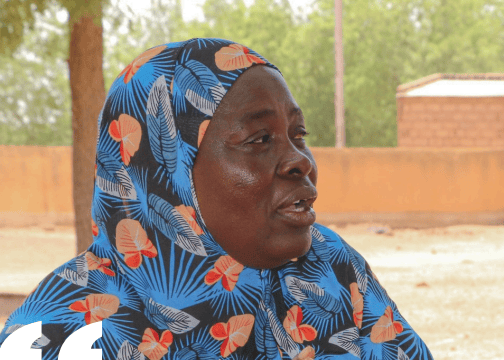
Somba Adissa has watched her community in Kérou, Bénin through decades of change. Young men fighting. Herders and farmers clashing. Women working, always working, but rarely leading.
Then things started to shift.
Young Peace Ambassadors, trained through Search and its partner, started showing up before conflicts escalated. Mediating. Redirecting. Choosing dialogue over confrontation. The farmer-herder conflicts that had turned violent, with machetes drawn and lives threatened, began to be handled differently.
An inclusive dialogue framework brought together agriculturalists, herders, and communities from across borders, including Gourmantché communities from Burkina Faso.
But the change Somba talks about most isn’t any of that.
It’s her own election.
She is now the president of the management committee for the community market garden in Brignamaro.
In a community where women’s leadership in formal structures was not the norm, being chosen by peers and neighbors to lead a shared economic initiative is a signal.
Things are changing.
Not just in how conflicts are managed, but in who gets to lead. Who gets to decide. Whose voice carries weight in the spaces that shape daily life.
Somba puts it plainly: “The fact that I was elected president of the management committee is a strong sign of change.”
She’s right.
And she’s been waiting 60 years to say it.
The most powerful peacebuilders are rarely the ones we expect. They’re the ones who’ve been there all along. Waiting for the tools, the recognition, and the support to lead.
Your help brings those tools into their hands.
Subscribe to our blog
Receive an email whenever a new blog post is published.
