

Executive Summary
Between 2022 and 2026, Search for Common Ground (Search) Nigeria significantly advanced its conflict transformation mandate by integrating digital peacebuilding with traditional offline mediation. Confronted with the weaponization of social media to deepen religious and ethnic divides, Search invested strategically in empowering youth and micro-influencers to champion Freedom of Religion or Belief (FoRB), media literacy, and positive online engagement.
Through highly targeted interventions such as the Nigerian Youth Collective Action for Religious Engagement (Nigerian Youth CARE), the Joint Initiative for Strategic Religious Action (JISRA), the Promoting and Protecting Freedom of Religion and Belief (PP-FoRB) project, and Inclusive Religious Engagement in Nigeria Enhanced by Women (I-RENEW), Search has successfully built a long-term ecosystem of digitally responsible young peacebuilders. By equipping these actors with social media listening tools, mediation frameworks, and religious literacy, Search has facilitated a measurable reduction in online hostility and catalyzed interfaith cooperation across Northern and Middle Belt Nigeria, shifting everyday interactions from fear and division to resilience and sustainable peace.
Why Search Invested in Digital Peacebuilding in Nigeria
Search recognized that online platforms in Nigeria act as a “double-edged sword”. While meant for connection, they are frequently weaponized to incite hatred along social, ethnic, and religious lines.
- Algorithmic Polarization: Search identified that platforms like Facebook and X prioritize sensational and divisive content, pushing users into “us vs. them” echo chambers and obscuring moderate voices.
- Rapid Dispersion of “Digital Poison”: Harmful narratives such as fake photos or misinterpreted religious texts spread faster than traditional mediation can manage, breaking transnational barriers and bypassing local frameworks.
- Anonymity and Identity Weaponization: The anonymity of the internet lowers the barrier for hate speech. Search noted a predominance of ethnic-based hate speech (47%), religious rhetoric (33%), and political rhetoric (30%) specifically targeting the Middle Belt and North-East.
To address this, Search strategically invested in young people, recognizing that they form the bulk of digital consumers and creators. By equipping youth to identify misinformation and utilize critical thinking, Search ensured they could counter harmful narratives rather than participate in outrage, thereby aligning with the Search’s Common Ground Approach of transforming conflict into cooperation.
Freedom of Religion or Belief (FoRB) and Digital Engagement
Search’s FoRB strategy merged offline dialogue with robust digital campaigns to protect vulnerable communities.
Adapting Messaging: Religious tolerance messaging was tailored for social media under projects like IRENEW, where young people amplified community voices and shifted narratives toward tolerance through social media.
Countering Misinformation: Participants in FoRB programming were trained to challenge hate speech and debunk rumors targeting religious communities. Digital campaigns complemented offline peacebuilding, translating digital awareness into real-world interfaith solidarity.
Micro Influencer Strategy
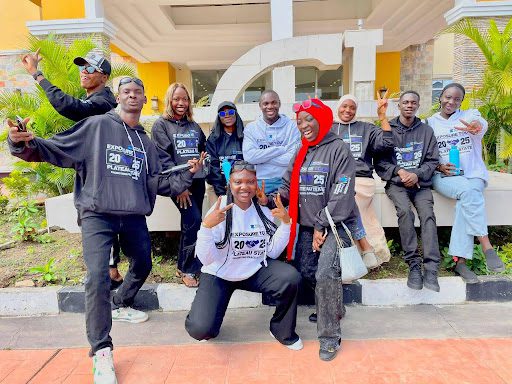
- Search trained 24 vibrant social media micro-influencers from Bauchi, Gombe, and Plateau states as part of the Youth CARE project (funded by the US Bureau of Democracy, Human Rights, and Labor).
- Training Methodology: In partnership with Build Up and Young Leaders Network (YLN), Search equipped influencers to monitor, access, and analyze data across Facebook, X, Instagram, and WhatsApp.
- Leverage Digital Platforms and Tools: Influencers learned to leverage participatory social media listening tools like Crowd Tangle, Apify, Meltwater, and Civic Signal.
Content Creation: These influencers were equipped to track religious freedom posts, verify facts using credible sources, analyze trends, and launch counter-narratives to dismantle misinformation.
Youth Capacity Strengthening
Search moved beyond elite dialogue by placing gender and youth inclusion at the center of FoRB programming.
Advocacy and Networks: Through the Bauchi Youth Religious Advocacy Network (BYRAN), youth leaders led concrete actions influencing state-level policies on inclusivity.
Interfaith Dialogue: Intra-faith and interfaith dialogues brought Christian and Muslim youths together to dismantle deeply ingrained prejudices. By emphasizing dialogue over outrage, Search empowered youth to become proactive peace ambassadors who mitigate local disputes before they escalate.
State-by-State Analysis
Bauchi: A primary hub for the Youth CARE project. BYRAN youth conducted advocacy visits to the Ministry of Religious Affairs and law enforcement. Activities included a “Sport for FoRB” event (145 participants) and dialogues in Yelwa and Gudum communities.
Plateau: Covered by Youth CARE, JISRA and I-RENEW. Plateau hosted extensive micro-influencer training and media campaigns on platforms like Silverbird Rhythm FM Jos (93.7).
Gombe: Part of the Youth CARE project. Engaged directly in the capacity building of micro-influencers to promote digital peacebuilding.
Abuja (FCT): Served as the national advocacy hub. The PP-FoRB project handed over a national toll-free FoRB hotline to the National Human Rights Commission here.
Project-by-Project Analysis
Nigerian Youth CARE (Sept 2023 – Sept 2025): Funded by the US DRL. Reached Bauchi, Plateau, and Gombe. Focused on youth advocacy, digital campaigns, and FoRB. Partnered with Young Leaders Network.
I-RENEW (Feb 2023 – July 2025): Funded by the EU. Focused on Kaduna and Plateau to empower women religious leaders and youth activists in promoting FoRB. Target beneficiaries included 12 women religious leaders, 12 youth activists, and 25 journalists.
COMITAS: EU-funded project focused on natural resource competition (farmer-herder) in Adamawa and Taraba, establishing sustainable peace architectures and empowering young people to use digital campaigns to promote social cohesion.
Impact and Success Stories
Gabra Muhammed (Bauchi): Having lost his home and two friends to religious violence in 2007, Gabra was trained under the Youth CARE project. He learned to identify misinformation and now leads the Religious Advocacy Network, pushing for peace clubs in schools and bridging Christian-Muslim divides. Quote: “I realized that many of our conflicts were fueled by false stories… Now, whenever issues arise, people call me first to clarify. I tell them: investigate before you spread.”
Joy Apeh and Mallama Raihana (Kaduna): A Christian and a Muslim youth who met at a JISRA FoRB training. They co-founded the women’s wing of the Kakuri Peace and Social Development Initiative (KAPSOD), actively intervening in a local GBV case and referring it to FIDA.
Grace Yusuf Baba (Bauchi): Transformed from harboring deep mistrust of other faiths to becoming a digital peacebuilder via Youth CARE. Quote: “I have become receptive to people from other religions. I now see that with collaboration, we can all make our nation a better place.”
Aliyu Abubakar (Kaduna): Used JISRA training to prevent violence in Kasuwa Magani after allegations of poisoned grazing land surfaced between Fulani herders and the Adara community. He engaged the traditional leader and police to formalize the investigation, preventing a reprisal attack.
Lessons Learned
Digital Training Must Accompany Offline Mediation: Influencers equipped with social media listening tools (e.g., Crowd Tangle) proved highly effective at dismantling rumors before they manifested as offline violence.
Youth as Primary Drivers of FoRB: Young people, when given structured intergenerational networking opportunities, naturally pivot from participating in conflict to establishing policy-oriented advocacy (like BYRAN).
Anonymity Requires Localized Counter-Narratives: Because online anonymity shields hate speech, deploying localized micro-influencers who possess regional credibility is the most effective way to organically shift the narrative.
Recommendations
- Scale the Micro-Influencer Model: The success of the 24 trained influencers generating over 500,000 impressions proves the cost-effectiveness of this model. Search should scale this methodology across all active states.
- Standardize Digital M&E: Develop a unified tracking system to accurately disaggregate gender, age, and geographic data of all digital peacebuilding trainees across different donor streams.
Institutionalize Social Media Listening: Permanently embed tools like Meltwater and Awario into Search Nigeria’s EWER framework (as seen in Taraba/Benue) to automate the early detection of localized hate speech.
Conclusion
Search for Common Ground Nigeria has executed a holistic digital and offline peacebuilding strategy. By investing heavily in young micro-influencers and building their capacity in FoRB, media literacy, and early warning, Search has demonstrated that equipping local youth with digital analytical tools and empathetic dialogue skills drastically reduces online hate, promotes religious tolerance, and fortifies community resilience across Nigeria’s most fragile regions.
