

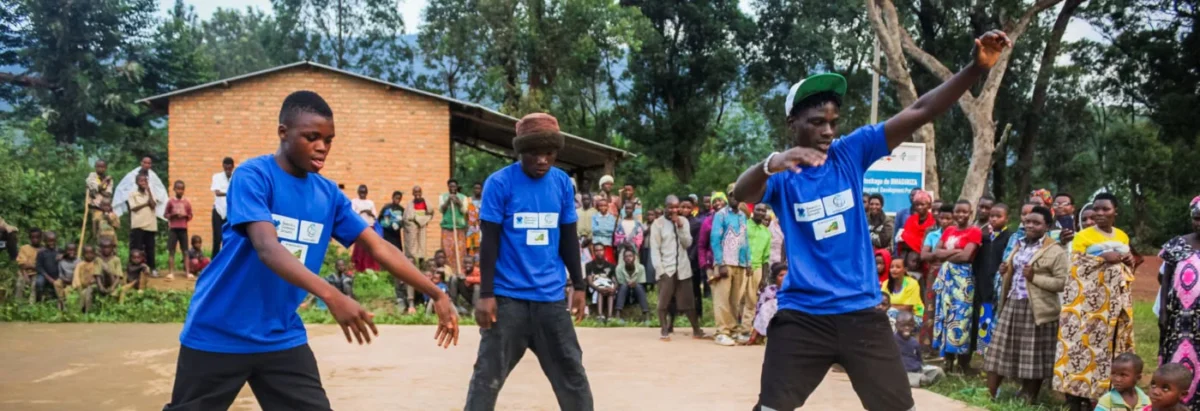
On a small square, a basketball bounces quickly on the ground. Encouraging shouts and cheers ring out with every score. A large group of children plays basketball with fierce focus, seemingly unbothered by what’s happening around them. The group forms a colorful mix of Burundian residents and Congolese refugees.
Just behind the square stands a guard, marking the start of the Kinama refugee camp. The neatly ordered rows of small houses and the calm that hangs over the sprawling site form a striking contrast with the liveliness on the square.
Major turnover
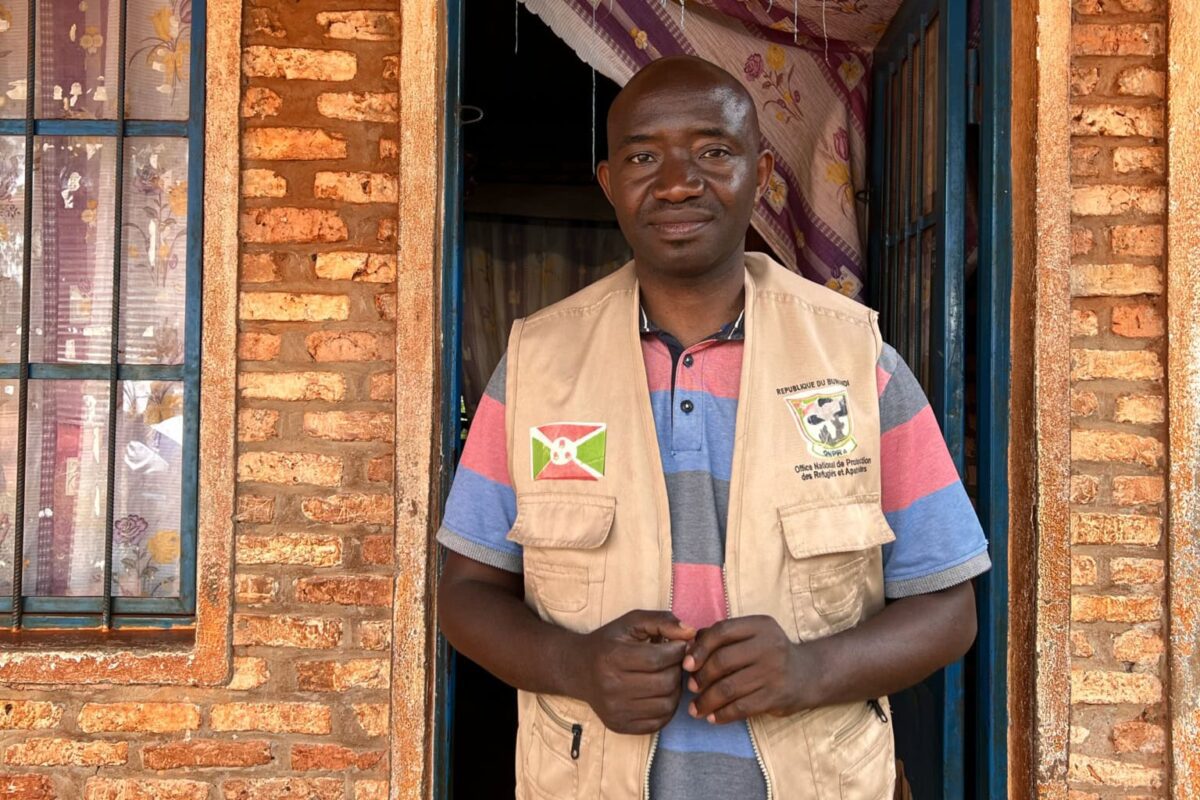
The Kinama refugee camp, located in the municipality of Gasorwe in northeastern Burundi, was established in 2002 to provide shelter for thousands of Congolese refugees. “Some teenagers have known nothing else and were born here,” says Mibura Gervais, the camp’s coordinator.
Since the camp’s founding, there has been a significant turnover of people. Some refugees apply for asylum abroad (whether successfully or not). At the same time, refugees keep arriving from neighboring Democratic Republic of Congo.
*”Some teenagers have known nothing else and were born here.”*
The most recent wave dates from December 2025, when violence flared in the east of the country as the armed group M23 seized the region around Goma. The United Nations refugee agency (UNHCR) coordinates the distribution of fleeing Congolese across the various reception sites.
Everything is present in the camp: a school, a health center… You could easily call it a village. “The calm that prevails here now certainly wasn’t always there,” Mibura says with a smile. “That was the result of long, sustained effort by a whole group of social workers and volunteers. Both Burundians and Congolese,” he immediately clarifies.
Tensions
Like Belgium and many other countries, Burundi has tensions between the local population and refugees — in this case, Congolese. Tensions often arise from a combination of prejudice and lack of accurate information on one hand, and scarcity of housing and pressure on social services on the other. Political debates, uncertainty about the duration of shelter, and cultural differences further contribute to social unrest and polarization.
Differences in rights and opportunities between groups within the same society can also be a source of tension. Where Belgians are protected by the safety nets of social security and welfare, different rules and rights often apply to newcomers. In Burundi, this is also the case for the Congolese living in Kinama. They’re allowed to leave the camp, but need a permit for longer absences. They also cannot simply buy or farm land, and lack access to various social services.
“Above all, trust needs to be built first.”
“From experience, we know that when there are tensions between different groups, you don’t resolve them by forcing the groups to sit at the table together and immediately talk about what’s bothering them,” says Emmanuel Ndacayisaba of Search for Common Ground, an international organization dedicated to conflict resolution and peacebuilding.
According to Emmanuel, trust must be built first, above all. “Understanding that ‘the other’ isn’t actually so different from you — and, for instance, also loves music or football.”
Mibura Gervais (Kinama coordinator): “The calm that prevails here now certainly wasn’t always there. That was the result of long, sustained effort by a whole group of social workers and volunteers. Both Burundians and Congolese.”
Football as a bonding agent
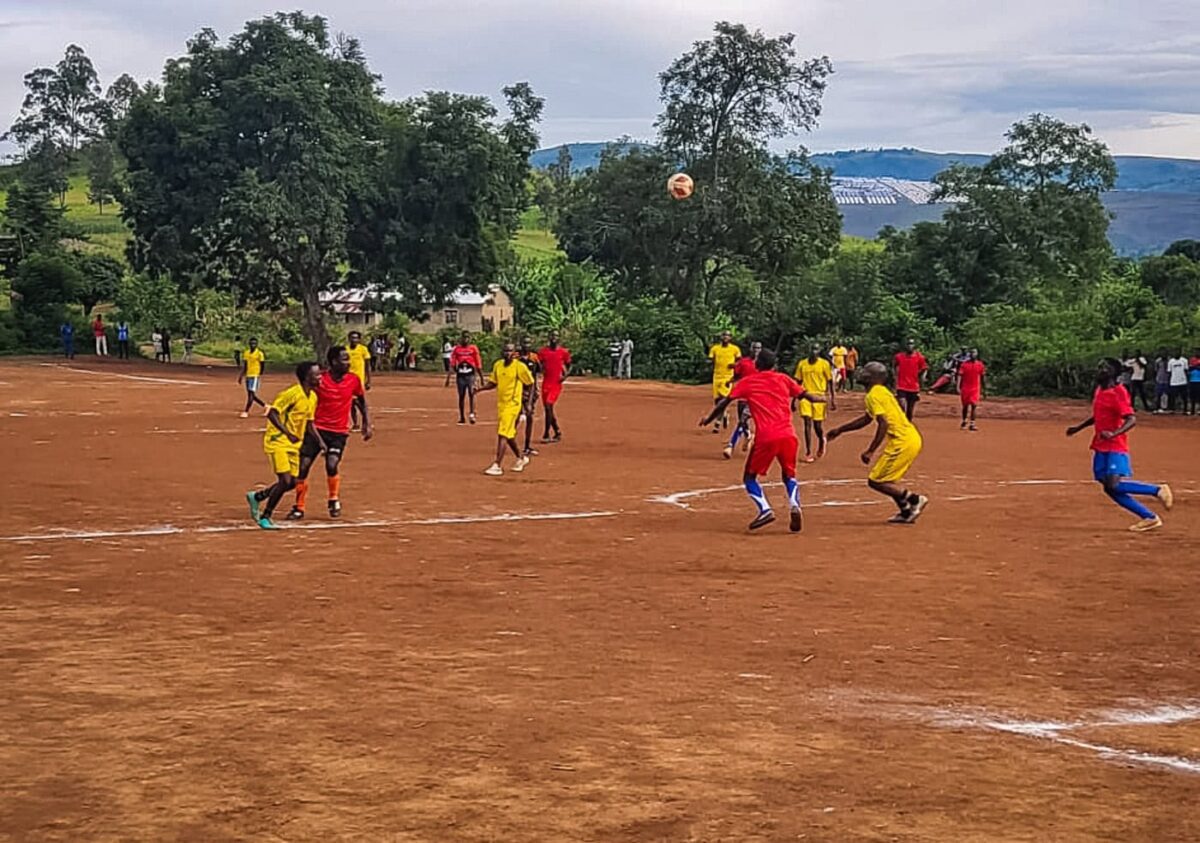
In Kinama, that last point can be taken quite literally. Football matches with mixed teams are regularly organized. Kinama is also the only refugee camp in Burundi that participates in the local football competition. Another popular activity that draws both refugees and local residents is theater.
“It goes wrong when one group starts deciding what the other needs.”
These activities are guided by various committees set up by Search for Common Ground. “They can only succeed if they’re mixed,” emphasizes David Kisanga Mupenda, a Congolese volunteer in the camp. “It goes wrong when one group starts deciding what the other needs.”
“I was once a refugee myself, in Tanzania,” adds Elias, who is Burundian. “I know what it’s like to have been a refugee. From that experience, I became a member of a committee to promote coexistence between Congolese and Burundians.”
Active listening
These committees receive the necessary guidance to carry out their work. Search for Common Ground developed an approach, the Common Ground Approach, which it consistently applies in conflict mediation. The specific approach and tools used are adapted to the context and nature of the conflict, such as language, cultural practices, or the scale of the conflict.
First and foremost, it’s essential to understand the conflict. What is its history? Who is involved, and what are their desires or needs? What external factors play a role? Other elements essential to conflict mediation: respect one another, listen actively, and distinguish between the problem and the person. Finally, it’s important to emphasize that conflict itself doesn’t have to be a problem — it can offer an opportunity to improve a situation and bring people closer together.
“It doesn’t take much for underlying tensions to erupt into violence.”
“Actually, active listening is the most important thing,” says volunteer David. Because although the camp seems peaceful at first glance and there are no visible tensions, it doesn’t take much for underlying tensions to erupt into violence.
He gives a recent example. “A while back, a man on a motorcycle hit a Congolese child. The father was beside himself and reacted very violently. Fortunately, I was able to step in along with a few other people. We listened, gave both parties space and time to air their grievances. Step by step, we found a way forward where both men wanted to talk to each other again, the aggressive behavior disappeared, and in the end the driver covered the costs of a medical check-up.”
Football matches with mixed teams are regularly organized. Kinama is also the only refugee camp in Burundi that participates in the local football competition.
Economic barriers
Recreation, such as football and theater, and listening to people’s concerns certainly help, but in both Belgium and Burundi, economic participation often proves decisive in strengthening social cohesion. In Gasorwe, initiatives are therefore emerging where Congolese can rent farmland from local residents to grow vegetables or grains.
These activities don’t change the fact that the whole country still faces numerous economic barriers, and economic opportunities remain limited. Two major factors underlie this. On one hand, there’s a lack of capital and it’s difficult to access credit, which prevents people from starting or expanding income-generating activities. On the other hand, there’s limited access to information about existing opportunities such as jobs, training, and financing. As a result, economic initiative and entrepreneurship are strongly held back.
Besides these economic barriers, the negative way in which refugees are perceived in society also plays a major role in undermining their economic opportunities. Prejudice, bitter comments, and misinformation on social media further reinforce this. Migration as a topic quickly raises tempers. A nuanced conversation often seems impossible.
“Migration as a topic quickly raises tempers. A nuanced conversation often seems impossible.”
“We notice that a lot of prejudice exists about refugees,” says camp coordinator Mibura Gervais. “Still, it’s interesting to see the pattern: the closer you get to Kinama, the more people are used to the presence of Congolese. They know them personally. But the further away you go, the more abstract the image of refugees becomes, and the harder it is to form a realistic picture.”
To strengthen local social cohesion and challenge prejudice, the committees, together with the camp’s administration, undertake various initiatives. Think, for example, of visiting days for police officers and local officials, or inviting these groups to activities organized on-site.
Layered identity
All these initiatives, however, require resources. This is undoubtedly relatable for social professionals worldwide. Due to a lack of funding, most committees are carried almost entirely by volunteers. Yet social cohesion isn’t just about resources and activities. How people talk about each other, and how identities are named and understood, also plays a crucial role.
“I much prefer being described as Congolese rather than as a refugee,” David says about this. “I understand that for administrative purposes, numbers are needed. But at the same time, my identity is so much more layered — I have so many more qualities than what’s contained in the word ‘refugee.'”
This article was translated from Dutch, originally published in Sociaal.Net
