

April 28, 2025
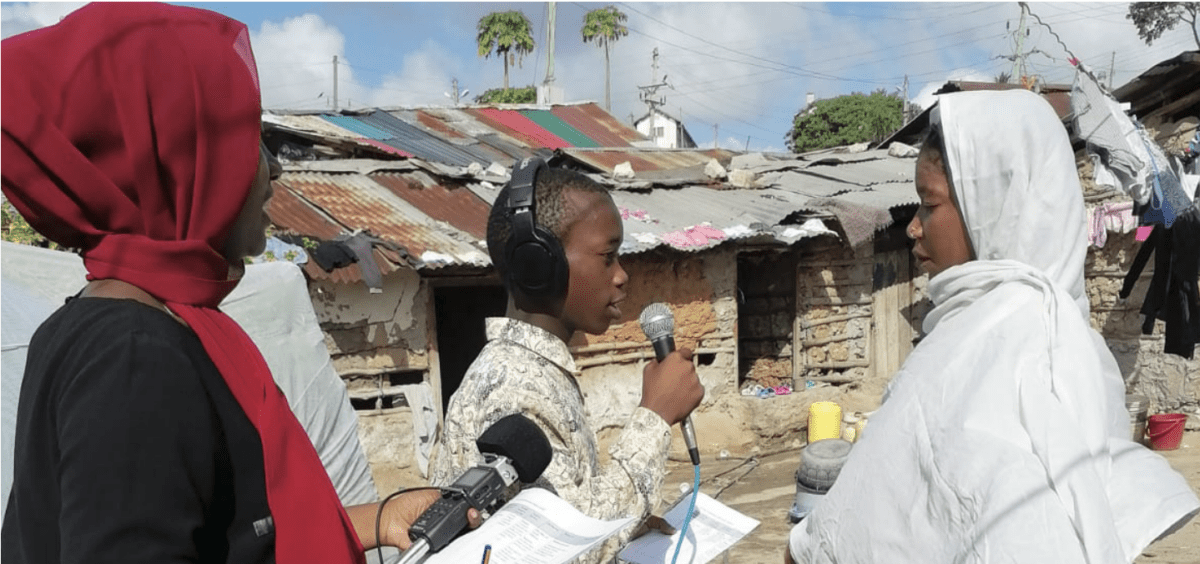
For Hussein Mohammed, a 16-year-old living in the slums of Tudor Moroto, Mombasa, where large families squeeze into a 36 square foot space and the river rising equates to a flooded home, life has always been a blend of challenges and resilience.
Growing up in a polygamous family with 13 siblings, his childhood was marked by struggles. His mother raised him and his two younger siblings almost single-handedly as his father worked irregularly as a mason. His income was never enough to meet their needs, and at one point, Hussein had to drop out of school for an entire year due to a lack of fees. This experience ignited a fire within him to persevere and work harder in school to make up for lost time.
As part of the Youth Talk project, Hussein attended Conflict Transformation workshops and participated in guided dialogues with other youth and across older generations. These activities are crucial because they address the root causes of conflict and promote sustainable relationships
between conflicting parties.
“One memorable incident at school tested my newfound skills. Two of my classmates were fighting over something as trivial as a pen. Their argument escalated from verbal insults to physical confrontation. Drawing on what I had learned, I approached them and used religion as a unifying factor. Since both of them were Muslim, I reminded them that Islam promotes peace and understanding. Using the conflict tree method, I identified the root cause of
their anger and guided them toward reconciliation. That moment showed me the power of dialogue and understanding in resolving conflicts.”
One of the most pervasive issues for life in the slums is gender-based violence (GBV), which leaves women vulnerable and perpetuates harmful societal norms. Many
girls in Hussein’s community are denied education, while men are pressured into playing “manly” roles that often lead to emotional suppression and depression. His father experienced this firsthand. To support the family, his father started a small eatery. However, the community mocked him for taking on a job they considered unsuitable for a man. The derogatory comments and isolation forced him to shut down the business, leaving the family in financial turmoil.
“These experiences fueled my passion for change. Through the Youth Talk project, I collaborated with other youth journalists to address gender-based violence and stereotypes in our community. We organized a youth-led initiative that brought together guardians, local leaders, security personnel, religious figures, and other stakeholders. Using theater and poetry, we sparked conversations about the harmful effects of GBV and the importance of breaking down gender stereotypes. Leading these discussions was one of the most fulfilling experiences of my life.”
Hussein’s involvement in radio programs further amplified his voice. Hosting engaging discussions on important topics earned him recognition in both his school and community. “It was heartwarming to have people approach me, saying they had heard me on the radio and appreciated my efforts.” These programs, along with other initiatives, made a tangible impact. Young girls in the community became more aware of their rights, and the stigma around men working in roles like running eateries began to fade.
“Although my father hasn’t reopened his business, other young men now freely operate eateries without fear of discrimination.”
Through his journey as a youth journalist, he discovered the power of using his voice to spark change. He aspires to continue being a peace ambassador in his community, encouraging others to rise above their hardships.
Subscribe to our blog
Receive an email whenever a new blog post is published.
