

Perspectives on social roles and dynamics are integrated throughout all of our programs, from preparation and design to implementation, monitoring, evaluation, and reporting, with the goal of promoting fairness and equal opportunities, combating discrimination, and ensuring broad participation in our peacebuilding programming. This approach has two key objectives: 1) to reduce social disparities and ensure that the specific needs of all individuals are addressed under the project; 2) to create conditions for fair access to project resources and for balanced participation in project implementation and decision-making. As a result, Search places the promotion of fairness at the forefront of its peacebuilding efforts and considers it a central pillar of programming and activities across the region.
Despite their historical and contextual differences, Lebanon, Iraq, Syria, Jordan, and Yemen all share barriers to achieving comprehensive peace and political processes. These barriers include the lack of involvement, equal representation, and effective participation of women and girls across dividing lines in each country.
Search for Common Ground (Search) has over a decade of experience in empowering women and girls to engage effectively in peace and security processes. We believe that the path toward peacebuilding and conflict transformation starts when everyone embraces fairness at personal and professional levels so that no one is left behind.
To address inequalities between men and women, promote fairness, encounter bias, stereotyping, and discrimination, and ensure involvement within our work, we have adopted a number of strategies and approaches.
On a programmatic level: We support the inherent agency of women and girls to be positive agents of change in their communities and countries. Recognizing that broad participation in the political process and sustainable peace are mutually reinforced through bottom-up and top-down efforts, we have identified opportunities and implemented strategies across the Levant and Arab Peninsula to increase the involvement of women and girls peacebuilders at all levels, catalyze wide engagement as grassroots/Track II peacebuilders at the subnational and national levels within the peace processes, and advance social norms that encourage meaningful participation of different stakeholders in peace and security. One of our successes has been adopting approaches that actively engage men and boys as positive allies, encouraging them to champion equal rights, support efforts to end Violence Against Women and Girls (VAWG), and advocate for women’s participation while addressing discrimination and exclusion.
One of the effective approaches we have utilized was the adoption of the Common Ground Approach (CGA), which focuses on “transforming how individuals, organizations, and governments deal with conflict – away from destructive approaches towards cooperative solutions.” This requires capacity building and development, especially around issues related to identities.
Furthermore, Search has developed a Mainstreaming Manual for our staff and partners that focuses on addressing inequalities and dynamics related to social roles and relations between women and men. This manual introduces both the relevant concepts connected to peacebuilding and practical mainstreaming terms and applications at different stages of the project cycle. It helps identify challenges that arise in our projects and offers solutions based on best practices and experience. The manual is linked to a Marker Tool checklist, which enables our staff and partners to assess how effectively they are integrating considerations of these social dynamics in their work.
Internally, Search is committed to fostering respect, cooperation, and fairness both in its global work and in its organizational practices. Its vision is a world where differences contribute to positive social change, where collaboration across differing views is standard, and where every individual, community, organization, and nation has the opportunity to thrive. Search works to represent a broad range of perspectives and provide support tailored to varying needs. To achieve this, it has established regional and in-country working groups and employs Employee Engagement Champions in some countries to ensure all staff members have a voice, feel safe, and remain engaged and productive.
Search’s core values – Collaboration, Audacity, Tenacity, Empathy, and Results – serve as cultural norms that guide the behavior of its staff members and govern its policies and practices. These values represent the foundation of Search’s identity and how it wants to show up both internally and externally with its partners.
Search enforces compliance with the Code of Conduct and related policies on Anti-Workplace Harassment, Protection from Sexual Exploitation and Abuse, Child Safeguarding, Conflict of Interest, and Anti-fraud to ensure the safety and well-being of the children, youth, and vulnerable adults it interacts with. It does not discriminate on the basis of race, color, religion, identity, identity expression, age, national origin, disability, marital status, sexual orientation, or military status in any of its activities or operations.
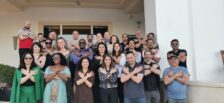
Search for Common Ground (Search), the world’s largest peacebuilding organization with over 36 years of building peace contributions in the most sensitive and conflict areas around the Levant and Arabian Peninsula, working on peacebuilding, stabilization, and social cohesion in and responding to conflicts through our Common Ground Approach – our innovative tool to end conflict around the world since 1990, and with an impartial reputation and proven track record in conflict transformation.
