

GUINEA: STORIES FROM EBOLA: Meet Emmanuel, Rosina, Kallaya, Saran, and Mamadou.
“There has been widespread misinformation about the disease. Rumors were circulating that the health center staff were injecting the virus. At the end of the epidemic, mistrust persisted as people still did not turn to health centers for treatment.” – Emmanuel, Kolla.
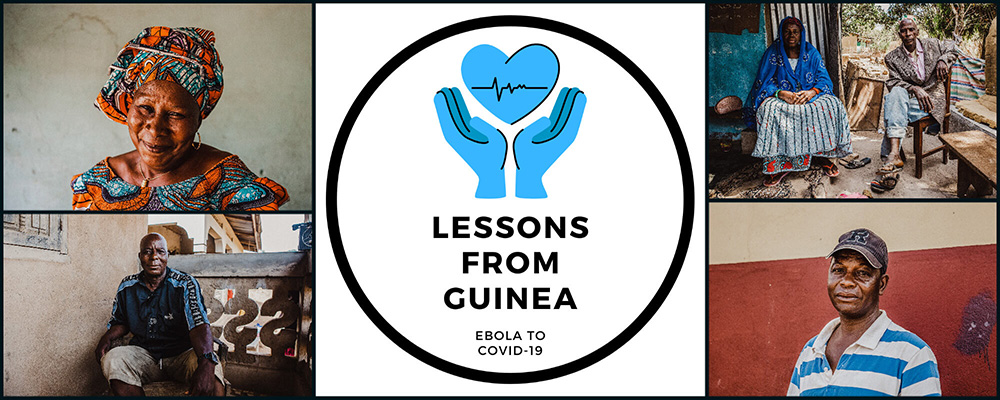
Before COVID-19, there was Ebola — a virus that ravaged West Africa and fueled fear that tore at the social fabric of communities. The stories and lessons learned from Ebola about how trust, collaboration and information can be used to stabilize, inform and rally have never been more relevant.
With COVID-19 at the door, our USAID-funded “Citizen’s Involvement in Health Governance” project to improve citizen understanding and participation in Guinea’s health system reforms has come at a crucial time. A doctor, a chief, a woman, and an actor share how theater has transformed them and their communities.
Read their stories: https://www.sfcg.org/guineapostebola/
And share them on your own social media: Instagram & Facebook
MALI: Talent Emerging Amid the Pandemic
This month, Search has partnered with a production company to launch the CoronArt Challenge: an art contest to raise awareness about the right steps to take to deal with the COVID-19 pandemic. With more than 100 videos already submitted, renowned singers, rappers, and citizens from all walks of life and regions are uniting their voices to curb the epidemic and protect the population. Search-Mali will also produce interactive programs allowing citizens to express themselves on the impact of Corona’s measures on their daily lives.
See: Video
NIGER: Search Obtains New Funds to Raise Awareness around COVID-19.
Our long experience in the field and our well-established network with journalists and radio stations in Niger have made us a reference in raising awareness and prevention among populations, even in the most remote and conflict-ridden areas. As a result, Search has just obtained funding from UNICEF to sensitize and engage communities in Diffa against COVID-19.
All our radio production will be adapted to include awareness and prevention messages on the pandemic as well as addressing rumors. This mass communication will be done through the synergy of 13 public, private, and community radio partners. They will leverage the influence and knowledge of health experts, religious, administrative, and traditional leaders in the development of monthly radio magazines, sketches, and interviews. Moreover, we will carry out awareness-raising activities in the streets and public squares by means of leaflets, billboards and the continuous broadcasting of messages through loudspeakers.
BURKINA FASO & MALI: New Regional Project Launch
Our regional project, “Supporting youth-led dialogue for peace and stability in the Sahel,” funded by the PATRIP Foundation, has officially started! As travel restrictions due to the pandemic have increased in the region, our teams in Mali and Burkina Faso met online to launch the project.
Over the next two years, Search will train and support more than 120 young leaders and key community actors, as well as 20 media professionals in the implementation of peace and dialogue initiatives in central Mali and northern Burkina Faso.
Based on our extensive experience in the implementation of youth-led peace and security initiatives, we aim to promote a bottom-up approach by fostering trust and collaboration between young people, local authorities and border communities to transform conflicts.
NIGERIA: Women at the Center of our Efforts.
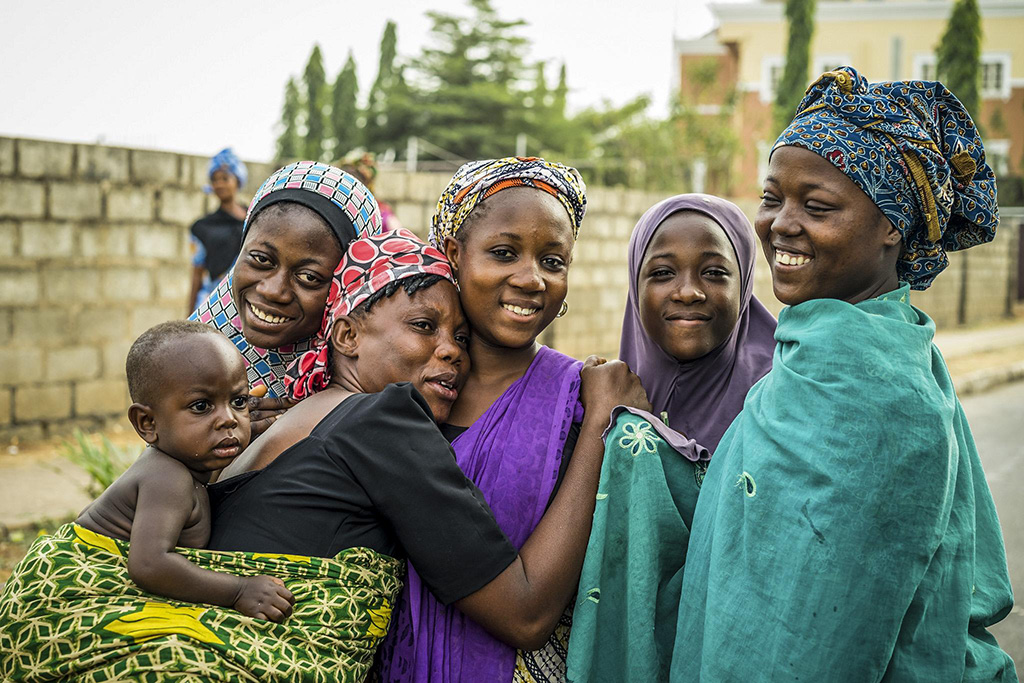
In parallel with our year-long celebration of women peacebuilders, Search has just completed two projects honoring Nigerian women. Both projects, implemented in partnership with UN Women and funded by the Government of Japan, have built the capacity and resilience of conflict-affected women and placed them at the forefront of the prevention of violent extremism in Yobe and Borno States, and the Federal Capital Territory. To this end, their incorporation in peace, security, and economic recovery processes has been the main objective of our team since 2019.
Our first project trained women and girls in livelihoods, income-generating activities, leadership, and conflict transformation. As a result, 1,785 women and girls in the Internally Displaced Persons (IDP) camps and host communities now have better access to productive resources and business development opportunities.
“We have learned that women can contribute to the welfare of their families, the cooperative they belong to, and to society.” – Regina, a member of the Bade Women Association Cooperative.
Building on this momentum, we launched a second project to protect women’s rights and strengthen their leadership to prevent violent extremism through their incorporation in the security sector reforms. This initiative has resulted in two training for women on the transformation of violent extremism (TVE), the development of six peace initiatives, and three national awareness-raising campaigns to combat violent extremism and violence against women and girls (VAWG).
In collaboration with the International Federation of Lawyers (FIDA) and the Ministry of Social Affairs, we were also able to establish a Women’s Empowerment Hub in Borno State. This space is now being used to conduct awareness initiatives focused on improving understanding of women’s rights, preventing violence, and promoting reconciliation, resilience, and de-radicalization.
Read: Success Stories
SIERRA LEONE: United for Greater Governance and Participation Project
For 3 consecutive years, we have supported Sierra Leone’s efforts towards a smooth democratic transition by ensuring the incorporation of its citizens within the decision-making and governance processes. Particular attention has been given to youth and women, to inform them about their rights and to have their voice heard.
With funding from the European Union, we trained 24 civil society organizations (CSOs) in civic outreach to their peers and gave them small grants to implement peacebuilding activities. We also launched a series of dialogues between citizens and policymakers on issues like women empowerment, violence against women and childre, and education and broadcasted awareness-raising campaigns with our radio series Atunda Ayenda and Uman 4 Uman.
As a result of this initiative, we measured a 42% increase in citizens’ knowledge of their civic rights and responsibilities and the processes of democratic governance. We also recorded a 34% increase in local capacity to monitor service delivery and, as a result, improve government accountability.
Read: Final Project Evaluation
